

In-Person
Workshops
Our in-person workshops provide students with an interactive environment to learn about financial literacy.
Through discussions, activities, examples, and real-world scenarios, we aim to make financial concepts easier to understand and apply.
Workshop
Video
Past In-Person Workshops
At MoneySmartLab, we believe financial literacy is best learned through both knowledge and hands-on experience. Our in-person workshops bring students together to explore important financial concepts through interactive activities, real-world scenarios, group discussions, and practical exercises.
During our past workshops, participants learned how to create a personal budget, distinguish between needs and wants, set savings goals, understand checking and savings accounts, explore credit and credit scores, and make thoughtful spending decisions.
Rather than simply presenting financial definitions, our team designed activities that encouraged students to apply what they learned. Participants worked through sample monthly budgets, made spending decisions based on realistic scenarios, compared financial choices, discussed common money mistakes, and explored how small financial decisions can affect long-term goals.
Our MoneySmartLab team members worked together to prepare workshop materials, lead discussions, explain financial concepts, answer questions, and guide participants through each activity. These workshops also gave students an opportunity to openly discuss financial topics and learn from one another in a welcoming environment.
Through our in-person workshops, our goal is to make financial education practical, engaging, and relevant to everyday life. Each workshop helps us continue our mission of giving young people the knowledge and confidence to make informed financial decisions.
Learn together. Practice real-world skills. Build a smarter financial future.
Thoughtfully crafted to elevate what matters most.

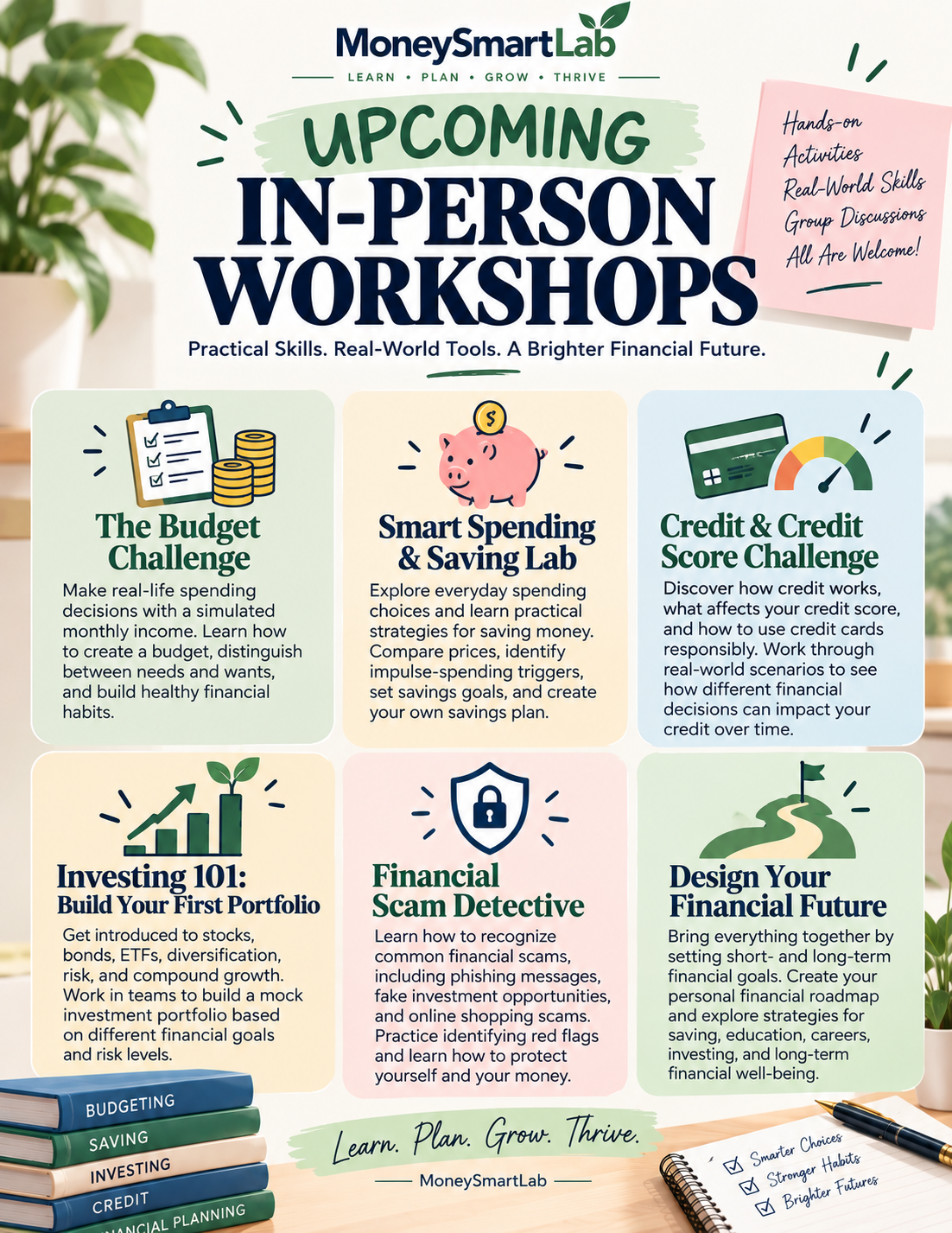
Upcoming In-Person Workshops
Join MoneySmartLab for a year of interactive, student-focused financial literacy workshops. Each month, we explore a different financial topic through hands-on activities, real-world scenarios, group discussions, and practical challenges.
October — The Budget Challenge
Learn how to create a realistic monthly budget, balance income and expenses, distinguish between needs and wants, and respond to unexpected costs.
November — Smart Spending & Saving
Explore everyday spending decisions, identify impulse-spending habits, set meaningful savings goals, and develop practical strategies for saving money.
December — Banking Basics
Discover how checking and savings accounts work, learn about interest and fees, and understand how to choose and manage a bank account responsibly.
January — Credit & Credit Scores
Learn how credit cards work, what affects a credit score, why interest matters, and how responsible borrowing can help build a healthy credit history.
February — Debt & Student Loans
Explore different types of debt, understand interest and repayment, and learn what students should consider before borrowing money for college or other major expenses.
March — Investing 101
Get introduced to stocks, bonds, ETFs, diversification, risk, and compound growth while learning the fundamentals of long-term investing.
April — Taxes & Your First Paycheck
Learn how to read a pay stub, understand gross pay versus take-home pay, explore common tax deductions, and see where your paycheck actually goes.
May — Financial Scam Detective
Learn how to recognize phishing, identity theft, fake investment opportunities, online shopping scams, and other common financial fraud. Practice identifying red flags and protecting your personal information.
June — Money & College
Explore the financial side of college, including tuition, scholarships, financial aid, student loans, living expenses, budgeting, and responsible borrowing.
July — Careers, Income & Employee Benefits
Learn how salary, taxes, health insurance, retirement benefits, and other forms of compensation work together when evaluating a future job.
August — Build Your Financial Future
Create a personal financial roadmap by setting short-, medium-, and long-term goals for saving, education, careers, investing, and major future expenses.
September — The MoneySmartLab Financial Challenge
Put everything together in an